
Audit readiness: Preventing compliance gaps before audits begin
Many organizations approach audits as deadline-driven events. Preparation begins when an audit notification arrives, documentation is gathered reactively, and teams scramble to validate controls that may not have been reviewed in months.
This approach confuses audit preparation with audit readiness.
Audit readiness is not about scheduling interviews or drafting an audit plan. It reflects whether an organization can demonstrate compliance at any moment, with accurate documentation, validated controls, and traceable oversight across systems and vendors.
In regulated environments, readiness determines whether audits become routine validations or disruptive investigations.
Let’s explore what audit readiness is and how you can prevent gaps before the audit begins.
What is audit readiness?
Audit readiness refers to an organization’s ongoing ability to demonstrate that compliance controls are properly implemented, monitored, and evidenced, without requiring last-minute remediation.
It includes:
- Verified implementation of regulatory controls.
- Centralized and accessible documentation.
- Clear ownership of compliance responsibilities.
- Continuous validation of control effectiveness.
- Up-to-date evidence aligned to regulatory frameworks.
Unlike audit planning, which focuses on how an audit will be conducted, audit readiness focuses on whether the organization’s compliance posture can withstand scrutiny at any time.
Why audit readiness fails in many organizations
Audit readiness failures rarely stem from missing policies. Most organizations have documented frameworks aligned with ISO 27001, SOC 2, GDPR, HIPAA, or industry standards. The breakdown occurs operationally.
1. Point-in-time compliance validation
Many compliance programs validate controls quarterly or annually. Between those reviews, system configurations change, new vendors are added, and access privileges evolve.
When auditors test controls, they evaluate their current state, not their state at the last review. If monitoring is not continuous, compliance gaps emerge.
2. Manual evidence collection
Spreadsheets, shared drives, screenshots, and email confirmations create fragmented evidence trails.
During an audit, teams often discover:
- Missing timestamps.
- Inconsistent documentation formats.
- Evidence that cannot be reproduced.
The issue is not necessarily control failure; it is documentation fragility.
3. Weak control ownership
Controls may be documented within GRC frameworks, but operational responsibility often sits with engineering, IT, HR, or vendor management teams.
When ownership is unclear:
- Evidence updates are inconsistent.
- Remediation actions are delayed.
- Control testing becomes reactive.
Auditors frequently identify this gap when they ask, “Who owns this control?” and receive inconsistent answers.
4. Vendor oversight gaps
Audit findings increasingly involve third parties. Organizations may maintain internal controls effectively, yet lack traceable oversight over vendors handling sensitive data.
If vendor certifications are outdated or reassessments are not documented, auditors may interpret this as insufficient governance. Audit readiness extends beyond internal systems.
Key components of effective audit readiness
Building audit readiness requires structural changes to how compliance is embedded into operations.
1. Centralized control mapping
Organizations should map regulatory requirements across applicable frameworks into a unified control structure. Instead of managing ISO 27001, SOC 2, and GDPR audits separately, controls should be aligned to eliminate duplication and ensure traceability.
This enables auditors to see how one control satisfies multiple obligations and reduces inconsistencies in documentation.
2. Continuous evidence collection
Collect evidence as part of operational workflows, not assembled retroactively.
For example:
- Access review logs should automatically update within centralized repositories.
- Configuration monitoring tools should feed compliance dashboards.
- Vendor documentation should be version-controlled and time-stamped.
Continuous evidence eliminates last-minute scrambling and improves audit confidence.
3. Defined control ownership and accountability
Each control must have:
- A designated operational owner.
- A compliance reviewer.
- A documented update frequency.
Ownership should be visible within compliance systems, ensuring accountability across departments.
4. Periodic internal readiness assessments
Internal reviews should simulate auditor testing. Instead of reviewing policy documentation alone, teams should test:
- Whether evidence can be produced immediately.
- Whether control implementations match documented descriptions.
- Whether remediation timelines are tracked.
This transforms audits from external shocks into expected validation exercises.
5. Integrated vendor oversight
Vendor compliance documentation, risk tiering, reassessment timelines, and control mappings should be maintained within the same governance structure as internal controls.
Audit readiness requires demonstrating that third-party risks are monitored systematically, not sporadically.
Audit readiness vs. audit preparation
Although often used interchangeably, these concepts differ significantly.
| Aspects | Audit readiness | Audit preparation |
| Timing | Continuous | Triggered by the upcoming audit |
| Focus | Control effectiveness and documentation maturity | Scheduling, coordination, logistics |
| Evidence | Already centralized and current | Gathered shortly before the audit |
| Risk exposure | Proactive | Reactive |
| Operational impact | Embedded in daily workflows | Often disruptive and resource-intensive |
Audit preparation supports an audit event. Audit readiness reduces audit risk.
Organizations that prioritize readiness experience fewer surprises, reduced remediation pressure, and smoother certification cycles.
How technology enables continuous audit readiness
Manual governance frameworks struggle to scale across multiple regulations, systems, and vendors.
Technology strengthens audit readiness by enabling:
- Unified control libraries mapped across frameworks.
- Automated evidence collection from operational systems.
- Real-time compliance dashboards.
- Vendor compliance tracking within the same platform.
- Automated reminders for reassessment and documentation updates.
This transforms compliance from a periodic review exercise into an integrated operational function. Automation does not replace governance judgment but strengthens visibility and traceability.
Takeaway: From reactive audits to continuous assurance
Audit readiness reflects organizational maturity. It demonstrates that compliance controls are not merely documented but actively implemented, monitored, and evidenced.
Organizations that invest in readiness reduce audit disruption, minimize compliance gaps, and improve regulatory confidence.
CyberArrow supports continuous audit readiness by enabling organizations to:
- Centralize control mapping across regulatory frameworks.
- Automate evidence collection from live systems.
- Monitor compliance posture in real time.
- Track vendor oversight within unified dashboards.
- Generate audit-ready reports instantly.
With structured oversight and automation, audit management becomes validation exercises, not crisis events.
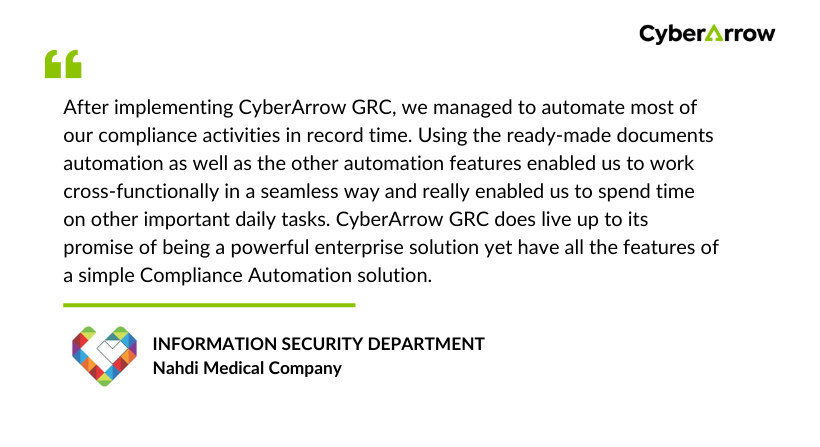
See what our clients have to say about CyberArrow GRC:
FAQs
What is audit readiness?
Audit readiness is an organization’s ongoing ability to demonstrate compliance through validated controls, centralized documentation, and current evidence.
How is audit readiness different from audit planning?
Audit planning focuses on organizing and scheduling an audit, while audit readiness ensures controls and documentation are continuously prepared before an audit begins.
Why do organizations struggle with audit readiness?
Common causes include manual evidence collection, fragmented documentation, unclear control ownership, and lack of continuous monitoring.
How can technology improve audit readiness?
Technology enables centralized control mapping, automated evidence collection, real-time monitoring, and audit-ready reporting, reducing reliance on reactive preparation.