HIPAA security awareness training requirements
Healthcare organizations manage some of the most sensitive data in the world. Patient records, medical histories, insurance details, and billing information all fall under protected health information.
Because of this, the healthcare sector remains one of the most targeted industries for cyberattacks. Data breaches involving healthcare organizations often expose large volumes of sensitive information and can lead to severe regulatory penalties.
The Health Insurance Portability and Accountability Act establishes strict security and privacy requirements for organizations that handle protected health information. One of the most important elements of compliance is HIPAA security awareness training.
HIPAA recognizes that technology alone cannot protect sensitive healthcare data. Employees must understand how to identify risks, follow security procedures, and protect patient information.
In this guide, we explain what HIPAA security awareness training requires, what regulators expect during audits, how healthcare organizations should implement training programs, and how automation can support compliance.
- What is HIPAA security awareness training
- Why HIPAA security awareness training is important
- Where HIPAA requires security awareness training
- HIPAA security rule requirements
- Who must receive HIPAA security awareness training
- Key topics in HIPAA security awareness training
- How often HIPAA security awareness training should be conducted
- Evidence required during HIPAA audits
- Measuring effectiveness of HIPAA security awareness training
- Common challenges in managing HIPAA security awareness training
- The role of automation in HIPAA security awareness training
- How CyberArrow Awareness Platform supports HIPAA security awareness training
- Why CyberArrow Awareness Platform is the best choice in 2026
- Final thoughts
- FAQs
What is HIPAA security awareness training
HIPAA security awareness training refers to structured education programs that help employees understand how to protect protected health information and maintain secure handling of patient data.
The goal is to ensure that workforce members understand security risks and follow proper procedures when handling electronic protected health information.
Training programs typically cover:
- Data protection practices.
- Password and authentication security.
- Phishing and social engineering threats.
- Incident reporting procedures.
- Secure access to healthcare systems.
- Device and workstation security.
HIPAA security awareness training ensures that employees understand how their daily activities impact patient data security.
Why HIPAA security awareness training is important
Human error remains one of the largest causes of healthcare data breaches.
Employees may accidentally:
- Send patient records to the wrong recipient.
- Fall victim to phishing attacks.
- Access information without authorization.
- Store patient data on unsecured devices.
- Share sensitive information improperly.
Even small mistakes can lead to major regulatory consequences. HIPAA violations can result in significant penalties, reputational damage, and legal consequences.
Security awareness training helps healthcare organizations reduce these risks by educating staff and strengthening security culture.
Where HIPAA requires security awareness training
HIPAA includes specific requirements related to workforce training. These requirements appear in the HIPAA Security Rule, which defines safeguards for protecting electronic protected health information.
The rule requires covered entities and business associates to implement a security awareness and training program for their workforce.
This requirement falls under administrative safeguards. Healthcare organizations must ensure that employees understand security policies and know how to identify potential threats.
HIPAA security rule requirements
The HIPAA Security Rule outlines several elements that should be included in security awareness training programs.
These include:
Security reminders
Organizations should provide periodic security reminders to reinforce safe practices. These reminders help employees stay aware of evolving threats.
Protection from malicious software
Employees should be trained to recognize malware risks and avoid unsafe downloads or suspicious attachments.
Log in monitoring
Employees should understand how login activity is monitored and how unauthorized access attempts may be detected.
Password management
Employees must understand strong password practices and authentication procedures. Password hygiene is essential for protecting healthcare systems.
These elements form the foundation of HIPAA security awareness training programs.
Quick link: ISO 27001 awareness training requirements
Who must receive HIPAA security awareness training
HIPAA security awareness training applies to the entire workforce.
This includes:
- Full-time employees.
- Part-time employees.
- Medical staff.
- Administrative personnel.
- IT teams.
- Contractors.
- Business associates.
Anyone who has access to protected health information must understand how to protect it.
Training should also be tailored based on role and level of access.
For example:
- Doctors and nurses handle patient data directly.
- Billing teams manage financial information.
- IT teams manage system access and infrastructure.
Role-based training improves awareness effectiveness.
Key topics in HIPAA security awareness training
Healthcare organizations should ensure that training covers the most important security risks and compliance responsibilities.
Protection of electronic protected health information
Employees must understand how to protect digital patient records.
Phishing awareness
Phishing attacks frequently target healthcare organizations. Employees should be trained to recognize suspicious emails and links.
Secure access and authentication
Training should reinforce strong password practices and secure login procedures.
Incident reporting procedures
Employees must know how to report security incidents or suspected breaches. Quick reporting can reduce damage.
Device and workstation security
Healthcare employees often use shared systems or mobile devices. Training should explain how to protect devices and prevent unauthorized access.
How often HIPAA security awareness training should be conducted
HIPAA does not specify an exact training frequency. However, best practices include:
- Training during employee onboarding.
- Annual refresher training.
- Targeted training after incidents.
- Updates when policies change.
- Additional training for high-risk roles.
Continuous awareness ensures that employees remain informed about evolving threats.
Evidence required during HIPAA audits
Regulators and auditors expect organizations to maintain documentation that proves training programs are active and effective.
Organizations should maintain:
- Training schedules.
- Attendance records.
- Completion certificates.
- Assessment results.
- Policy acknowledgment documentation.
- Security awareness campaign records.
Proper documentation helps demonstrate compliance with HIPAA security requirements.
Measuring effectiveness of HIPAA security awareness training
Healthcare organizations should measure whether training programs actually improve employee behavior.
Important metrics include:
- Training completion rates.
- Assessment scores.
- Phishing simulation performance.
- Incident reporting frequency.
- Reduction in security errors.
These metrics provide insight into whether awareness programs are reducing risk.
Quick link: GDPR employee awareness training requirements
Common challenges in managing HIPAA security awareness training
Many healthcare organizations face operational challenges when managing awareness programs.
Common issues include:
Manual tracking
Spreadsheets may be used to track participation, which creates gaps in documentation.
Inconsistent training delivery
Different departments may receive different training content.
Limited reporting capabilities
Security teams may struggle to generate leadership-level reports.
Lack of centralized documentation
Training records may be scattered across multiple systems. Automation can help address these challenges.
The role of automation in HIPAA security awareness training
Modern awareness platforms allow organizations to automate training management.
Automation enables healthcare organizations to:
- Deliver structured training programs.
- Conduct phishing simulations.
- Track employee participation.
- Maintain centralized records.
- Generate compliance reports.
- Support audit readiness.
Automation also improves scalability across large healthcare systems.
How CyberArrow Awareness Platform supports HIPAA security awareness training
CyberArrow Awareness Platform is designed to support structured security awareness programs aligned with regulatory requirements.
It helps healthcare organizations:
- Deliver HIPAA security awareness training modules.
- Track employee participation and completion.
- Conduct phishing awareness simulations.
- Maintain centralized documentation.
- Generate compliance-ready reporting.
- Monitor security awareness training metrics.
Because CyberArrow Awareness Platform operates within the broader CyberArrow GRC ecosystem, awareness programs can integrate directly with governance and compliance processes.
This allows organizations to connect awareness outcomes to:
- Risk registers.
- Compliance frameworks.
- Policy management.
- Audit documentation.
The result is improved oversight and stronger compliance management.
Why CyberArrow Awareness Platform is the best choice in 2026
Healthcare organizations require more than simple training tools.
They need awareness solutions that support:
- Enterprise-scale training programs.
- Continuous awareness campaigns.
- Compliance documentation.
- Risk-aligned reporting.
- Integration with governance and compliance processes.
CyberArrow Awareness Platform provides these capabilities while operating within a full enterprise GRC environment.
By automating security awareness training delivery, participation tracking, phishing simulations, and reporting, CyberArrow helps healthcare organizations strengthen security culture and maintain HIPAA compliance readiness.
For healthcare organizations seeking to modernize their HIPAA security awareness training program and reduce human risk, CyberArrow Awareness Platform offers a scalable and reliable solution.
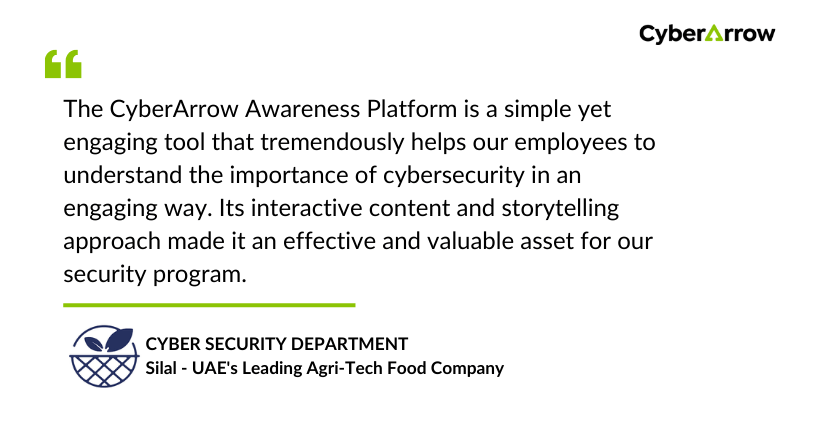
See what Silal has to say about CyberArrow Awareness Platform:
Final thoughts
Human error continues to be one of the largest contributors to healthcare data breaches. Because of this, HIPAA security awareness training remains a critical part of protecting protected health information.
Effective training ensures employees understand their responsibilities, recognize threats, and follow secure practices when handling patient data.
However, awareness programs must also be measurable, documented, and continuously maintained to support compliance.
CyberArrow Awareness Platform provides a structured and automated solution that helps healthcare organizations deliver awareness training, track employee participation, maintain compliance documentation, and integrate awareness into enterprise governance processes.
For organizations that want to strengthen security culture and support HIPAA compliance at scale, CyberArrow Awareness Platform provides a modern and reliable solution.
FAQs
Is HIPAA security awareness training mandatory?
Yes. The HIPAA Security Rule requires covered entities and business associates to implement a security awareness and training program for all workforce members who have access to electronic protected health information.
Who must complete HIPAA security awareness training?
All workforce members who handle or have access to protected health information should complete HIPAA security awareness training. This includes employees, contractors, medical staff, administrative teams, and IT personnel.
How often should HIPAA security awareness training be conducted?
Best practice is to provide training during employee onboarding and conduct regular refresher sessions, typically once per year. Additional training may be required after security incidents or policy updates.