What are GRC tools? Why CyberArrow GRC is #1
Organizations today operate in an environment where regulatory expectations, cyber security risks, and operational complexity continue to increase. Businesses must comply with multiple frameworks, manage enterprise risks, maintain internal governance structures, and prepare for regular audits.
For many organizations, these responsibilities are still handled through spreadsheets, shared folders, and disconnected systems. While this approach may work initially, it quickly becomes difficult to maintain as organizations grow and regulatory obligations expand.
GRC tools provide organizations with a structured platform for managing governance, risk, and compliance activities within a single centralized system. Instead of relying on manual processes, organizations can use GRC tools to automate workflows, monitor risks, track regulatory obligations, and maintain audit-ready documentation.
In this guide, we explain what GRC tools are, why they are important for modern organizations, and why CyberArrow GRC stands out as one of the most powerful enterprise GRC platforms available today.
- What are GRC tools
- Why organizations need GRC tools
- Core functions of GRC tools
- Benefits of using GRC tools
- How GRC tools support modern compliance frameworks
- Common challenges without GRC tools
- How GRC tools improve organizational governance
- Why CyberArrow GRC is the #1 enterprise GRC platform
- Why CyberArrow stands above other GRC tools
- The future of GRC tools
- Conclusion
- FAQs
What are GRC tools
To understand what GRC tools are, it is helpful to first understand the concept of GRC.
GRC stands for:
Governance: Governance refers to the policies, processes, and structures that guide how an organization operates and makes decisions. Governance ensures accountability, transparency, and ethical management.
Risk Management: Risk management involves identifying potential threats to the organization, evaluating their impact, and implementing controls to reduce risk exposure.
Compliance: Compliance ensures that an organization follows regulatory requirements, industry standards, and internal policies.
GRC tools are software platforms that combine these three areas into a unified system. They allow organizations to monitor risks, track compliance obligations, manage policies, and prepare for audits through structured workflows and centralized reporting.
Instead of managing governance, risk, and compliance separately, GRC tools create a single platform that provides visibility and coordination across the entire organization.
Why organizations need GRC tools
The demand for GRC tools has grown significantly in recent years as organizations face increasing regulatory and cyber security challenges.
Companies must comply with numerous standards and regulations, including:
Without a centralized system, managing these requirements becomes difficult.
Organizations that rely on manual processes often face several challenges.
Limited visibility into enterprise risks
Leadership teams may not have a clear understanding of risk exposure across departments.
Manual compliance tracking
Compliance activities may be tracked through spreadsheets and email communication, increasing the chance of errors.
Inefficient audit preparation
Gathering evidence for audits can take weeks if documentation is not organized properly.
Difficulty managing multiple frameworks
Organizations often need to comply with several standards simultaneously.
GRC tools solve these challenges by providing structured workflows, centralized documentation, and automated reporting.
Quick link: CyberArrow GRC April product update
Core functions of GRC tools
Modern GRC platforms support several critical business functions.
Risk management
GRC tools allow organizations to identify risks, assess their likelihood and impact, and track mitigation activities.
Risk registers and dashboards help leadership teams understand risk exposure.
Compliance management
Organizations must track regulatory requirements and ensure that controls are implemented properly.
GRC tools map compliance frameworks to internal policies and procedures.
Policy management
Policies and governance documents must be maintained in a structured and accessible format.
GRC tools centralize policy management and track employee acknowledgment.
Audit management
Internal and external audits require structured workflows and documentation.
GRC tools allow organizations to manage audit preparation and maintain evidence in one place.
Reporting and dashboards
Leadership teams require real-time insights into compliance posture and risk exposure.
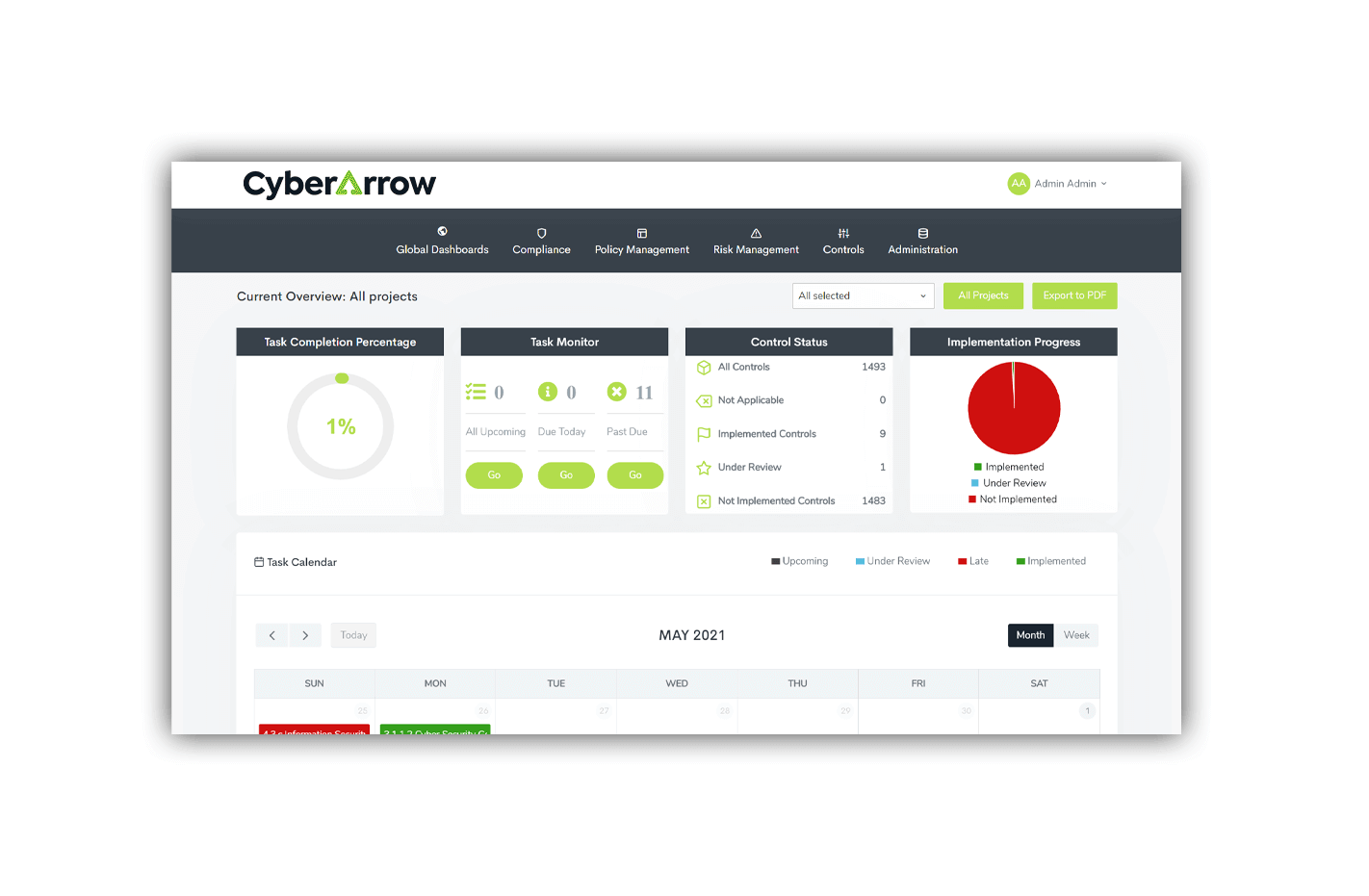
GRC platforms provide dashboards that summarize risk status, control effectiveness, and compliance progress.
Benefits of using GRC tools
Organizations that adopt GRC tools gain several advantages.
Centralized governance
GRC platforms provide a single system for managing governance processes across the organization.
Improved risk visibility
Leadership teams can monitor risks across departments and business units.
Automated compliance management
Automation reduces manual work and ensures consistent compliance tracking.
Faster audit preparation
Evidence and documentation are stored in one centralized platform.
Better decision-making
Clear reporting and dashboards allow executives to make informed decisions. These benefits make GRC tools essential for organizations operating in regulated industries.
How GRC tools support modern compliance frameworks
Many organizations must maintain compliance with multiple frameworks at the same time.
Examples include:
- ISO 27001 for information security.
- SOC 2 for service organizations.
- GDPR for data protection.
- HIPAA for healthcare data security.
- NIS2 for European cyber security regulations.
Managing these frameworks manually can create duplication and confusion. GRC tools allow organizations to map controls across frameworks, reducing duplication and improving efficiency.
For example, one control related to access management may satisfy requirements across multiple standards.
By mapping controls once and applying them across frameworks, organizations simplify compliance management.
Common challenges without GRC tools
Organizations that do not use GRC tools often encounter operational difficulties.
Fragmented systems
Policies, risks, and compliance documentation may exist in multiple locations.
Inconsistent reporting
Leadership teams may struggle to obtain accurate compliance insights.
Increased audit pressure
Manual evidence collection makes audits stressful and time-consuming.
Limited accountability
Without structured workflows, responsibilities may not be clearly defined.
Adopting a centralized GRC platform helps eliminate these challenges.
How GRC tools improve organizational governance
Strong governance requires clear visibility into policies, risks, and compliance obligations.
GRC tools support governance by providing structured processes for:
- Policy management.
- Risk oversight.
- Compliance monitoring.
- Audit management.
By integrating these functions into a single platform, organizations can ensure that governance decisions are supported by reliable data.
This helps leadership teams maintain accountability and transparency across the organization.
Why CyberArrow GRC is the #1 enterprise GRC platform
Among the many platforms available today, CyberArrow stands out as a powerful enterprise solution for organizations that want to automate and modernize their GRC programs.
CyberArrow GRC is designed to provide a complete governance, risk management, and compliance platform that centralizes critical processes in one integrated system.
Enterprise risk management
CyberArrow helps organizations identify, assess, and monitor risks across the enterprise.
Risk registers and dashboards provide leadership teams with visibility into risk exposure.
Compliance automation
CyberArrow supports multiple regulatory frameworks and allows organizations to track compliance requirements through structured workflows.
Controls can be mapped across frameworks, reducing duplication and simplifying compliance management.
Policy and document management
CyberArrow centralizes governance policies and documentation, ensuring that employees can access the latest versions and acknowledge required policies.
Audit management
CyberArrow allows organizations to manage internal and external audits efficiently by storing evidence and documentation within a single system.
Real-time reporting
CyberArrow provides dashboards that allow leadership teams to monitor risk status, compliance progress, and governance activities in real time.
Why CyberArrow stands above other GRC tools
Several factors make CyberArrow a leading choice among enterprise GRC platforms.
Comprehensive functionality
Automation capabilities
Automated workflows reduce manual effort and improve operational efficiency.
Multi-framework support
CyberArrow allows organizations to manage compliance across multiple standards within one platform.
Centralized documentation
Policies, controls, and audit evidence are maintained in one structured system.
Scalable enterprise platform
CyberArrow is designed to support organizations of all sizes as their compliance and risk management programs grow.
These capabilities make CyberArrow an ideal solution for organizations seeking to modernize their governance and compliance operations.
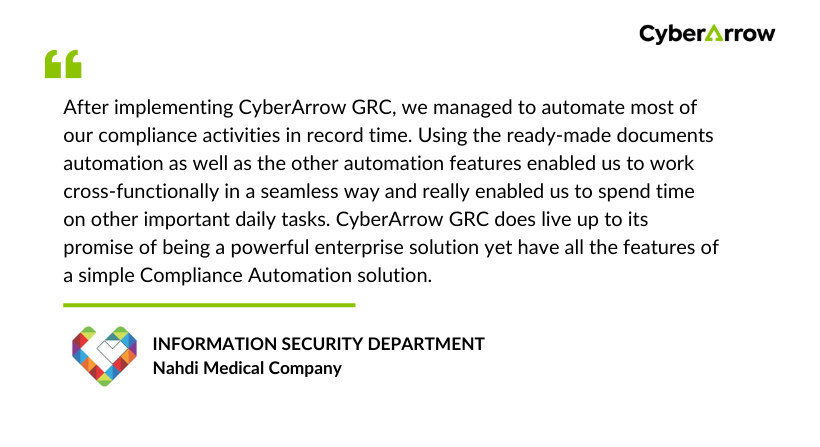
See what our clients have to say about CyberArrow GRC:
The future of GRC tools
As organizations face increasing regulatory expectations and cyber risks, GRC tools will continue to evolve.
Several trends are shaping the future of GRC platforms.
Integrated risk management
Organizations are moving toward integrated approaches that combine cyber security, operational, and strategic risks.
Real-time compliance monitoring
Continuous monitoring allows organizations to detect compliance gaps earlier.
Automation of governance processes
Automation reduces manual work and improves consistency across departments.
Data-driven decision making
Advanced analytics provide leadership teams with deeper insights into risk exposure.
These developments highlight the growing importance of modern GRC platforms.
Conclusion
Understanding what GRC tools are is essential for organizations seeking to strengthen governance, manage risks effectively, and maintain regulatory compliance.
GRC tools provide a centralized platform that allows organizations to automate governance processes, monitor risks, track compliance obligations, and maintain audit readiness.
As regulatory environments become more complex, relying on manual processes becomes increasingly difficult. Organizations require modern platforms that provide visibility, structure, and automation.
CyberArrow GRC stands out as one of the most comprehensive enterprise GRC platforms available today. By centralizing governance, risk management, compliance tracking, and audit management within a single system, CyberArrow allows organizations to simplify complex regulatory environments and operate with greater confidence.
For organizations looking to modernize their governance, risk management, and compliance programs, CyberArrow GRC offers a powerful and scalable solution designed for the demands of today’s regulatory landscape.
FAQs
What are GRC tools used for?
GRC tools are software platforms used to manage governance processes, identify and monitor risks, and track compliance with regulations and standards. They help organizations centralize policies, automate compliance activities, and maintain audit-ready documentation.
Why are GRC tools important for organizations?
GRC tools provide visibility into enterprise risks, streamline compliance management, and improve governance oversight. They reduce manual work, improve reporting accuracy, and help organizations stay prepared for regulatory audits.
What makes CyberArrow GRC different from other GRC tools?
CyberArrow GRC is a full-fledged enterprise GRC platform that integrates governance, risk management, compliance tracking, policy management, and audit readiness within a centralized system designed for automation and scalability.