Best Governance, Risk, and Compliance (GRC) tools of all time
Organizations today operate in an environment where risk, regulation, and accountability are more important than ever. Governments introduce new compliance requirements regularly. Cyber threats evolve continuously. Stakeholders expect transparency and strong governance practices.
Managing these responsibilities manually is no longer practical. Many organizations still rely on spreadsheets, scattered documentation, and disconnected systems to track risks and compliance obligations. This approach creates inefficiencies, increases the likelihood of errors, and makes audit preparation more difficult.
This is why businesses increasingly rely on governance, risk, and compliance (GRC) tools. These platforms provide centralized systems that allow organizations to manage governance structures, monitor risks, track compliance obligations, and maintain documentation required for audits.
In this guide, we explore the best governance, risk, and compliance (GRC) tools of all time, highlighting the platforms that have had the greatest impact on enterprise risk management and regulatory compliance.
What are Governance, Risk, and Compliance (GRC) tools
Governance, risk, and compliance (GRC) tools are software platforms designed to help organizations manage three critical business areas in a structured way:
Governance: Governance refers to policies, procedures, and internal structures that guide how organizations operate and make decisions.
Risk management: Risk management involves identifying, assessing, and mitigating risks that may impact business operations.
Compliance: Compliance ensures that organizations follow regulatory requirements, industry standards, and internal policies.
GRC tools bring these three areas together into one integrated platform.
Instead of managing governance, risk, and compliance separately, organizations can track everything in a single system that provides visibility across departments and leadership teams.
Why organizations need GRC tools
The number of regulations affecting organizations continues to grow across industries. Companies must comply with standards and frameworks such as:
Without a centralized platform, organizations face several challenges.
Lack of visibility
Leadership teams may struggle to understand the organization’s risk exposure.
Manual compliance tracking
Compliance requirements are often managed through spreadsheets or email communication.
Inefficient audit preparation
Gathering evidence for audits can take weeks when documentation is not centralized.
Difficulty managing multiple frameworks
Organizations often need to maintain compliance with multiple standards simultaneously.
Modern GRC platforms address these challenges by providing automation, reporting, and centralized documentation management.
Key capabilities of modern GRC tools
When evaluating governance, risk, and compliance (GRC) tools, organizations should consider several important capabilities.
Risk management
The platform should allow organizations to identify risks, evaluate their impact, and track mitigation activities.
Compliance tracking
GRC tools should map regulatory requirements to internal controls and policies.
Policy management
Organizations must maintain centralized governance documents and ensure that policies remain updated.
Audit management
Internal and external audits require structured workflows and evidence management.
Reporting and dashboards
Executives need clear visibility into risk exposure and compliance posture.
Workflow automation
Automation helps reduce manual tasks and improve operational efficiency.
Platforms that combine these capabilities allow organizations to build mature and scalable GRC programs.
Best Governance, Risk, and Compliance (GRC) tools of all time
The following platforms are widely recognized as some of the most influential and effective GRC solutions used by organizations around the world.
1. CyberArrow GRC
CyberArrow GRC is one of the most comprehensive enterprise governance, risk, and compliance (GRC) tools available today. The platform is designed to help organizations automate their entire GRC program while maintaining strong governance oversight.
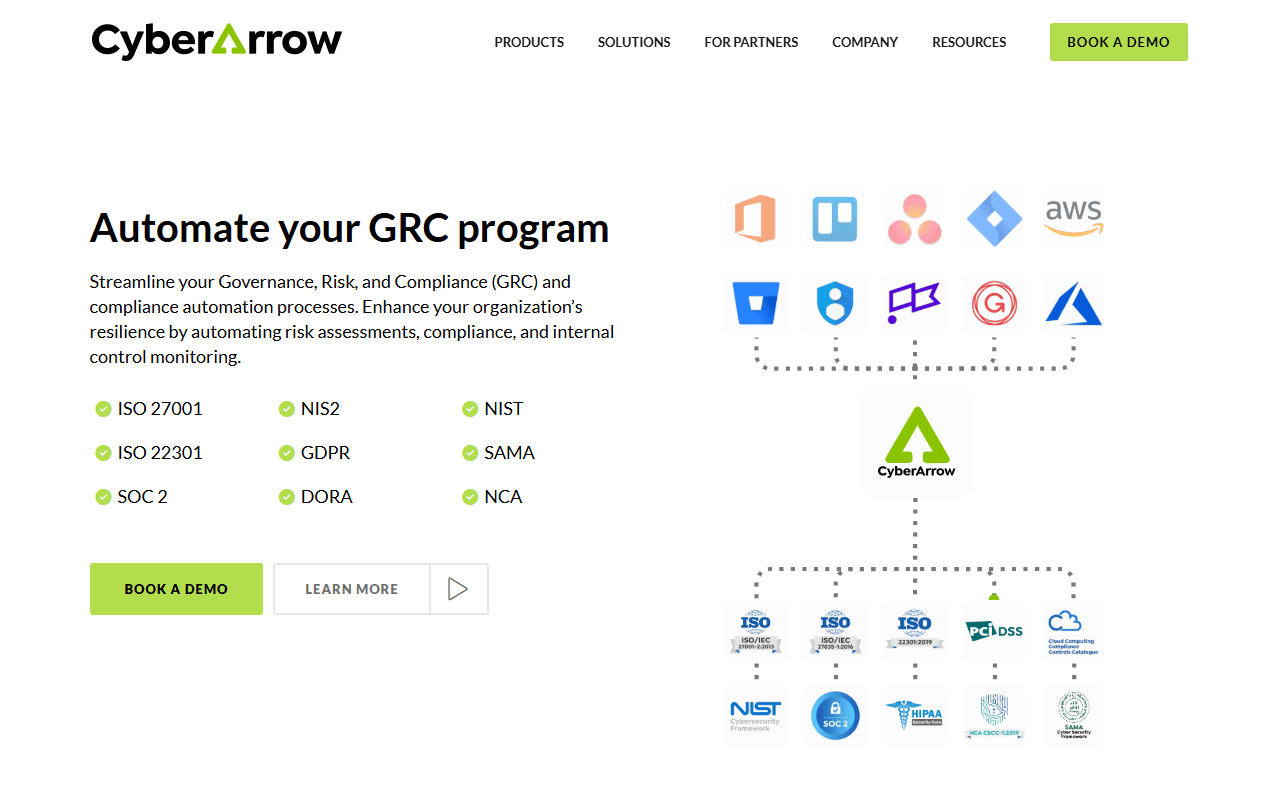
CyberArrow centralizes governance, risk management, compliance, and audit processes in one integrated system.
Key capabilities
CyberArrow provides a wide range of features that support enterprise GRC programs.
- Enterprise risk management.
- Compliance framework mapping.
- Policy and document management.
- Internal audit management.
- Evidence and documentation tracking.
- Third-party risk management.
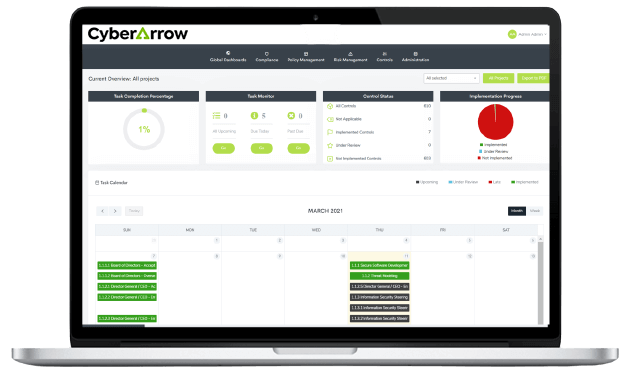
- Real-time reporting dashboards.
One of CyberArrow’s major strengths is its ability to manage compliance across multiple frameworks simultaneously. Organizations can map controls across standards such as ISO 27001, SOC 2, GDPR, HIPAA, and NIS2 within a single platform.
CyberArrow also supports workflow automation, which helps organizations assign responsibilities, track remediation activities, and maintain continuous compliance readiness.
Why CyberArrow stands out
Among all governance, risk, and compliance (GRC) tools, CyberArrow stands out because it offers a complete enterprise platform that supports every stage of the GRC lifecycle.
Organizations benefit from:
- Centralized governance oversight.
- Automated compliance workflows.
- Integrated risk management.
- Structured audit preparation.
- Real-time compliance monitoring.
CyberArrow allows organizations to move away from manual processes and build mature, scalable GRC programs.
2. MetricStream
MetricStream is one of the most widely used GRC platforms in large global enterprises. The platform provides integrated solutions for risk management, compliance management, and audit oversight.
MetricStream supports organizations that operate in complex regulatory environments and require detailed risk monitoring capabilities.
Key features
- Enterprise risk management.
- Operational risk management.
- Compliance management.
- Internal audit management.
- Policy and document management.
MetricStream allows organizations to consolidate risk and compliance activities across multiple business units.
Best for
Large multinational organizations with complex risk environments.
3. ServiceNow GRC
ServiceNow is well known for its enterprise service management platform, but it also provides powerful governance, risk, and compliance capabilities.
ServiceNow GRC integrates risk management with operational workflows, allowing organizations to embed compliance processes into daily operations.
Key features
- Integrated risk management.
- Policy and compliance tracking.
- Continuous control monitoring.
- Automated workflows.
- Integration with IT operations.
ServiceNow is often used by organizations that already rely on its IT service management platform.
Best for
Organizations seeking strong integration between IT operations and risk management.
4. Workiva
Workiva provides a platform focused on governance, compliance reporting, and internal controls. It is particularly popular among publicly traded companies that must manage complex reporting requirements.
The platform helps organizations connect financial data, compliance documentation, and governance reporting.
Key features
- Risk and compliance management.
- Internal controls monitoring.
- Audit management.
- Financial reporting integration.
- ESG reporting capabilities.
Workiva allows organizations to maintain transparency and accuracy across governance and reporting processes.
Best for
Public companies with complex financial compliance obligations.
5. Riskonnect
Riskonnect provides an enterprise platform designed to unify risk management, compliance, and resilience activities.
The platform is known for its enterprise risk management capabilities and its ability to connect risk insights across different departments.
Key features
- Enterprise risk management.
- Compliance management.
- Internal audit tracking.
- Business continuity management.
- Third-party risk management.
Riskonnect helps organizations manage operational resilience and risk visibility across the enterprise.
Best for
Organizations focused on enterprise risk management and operational resilience.
How to choose the right GRC tool
Selecting the right GRC platform requires careful evaluation of business requirements and regulatory obligations.
Organizations should consider the following factors.
Compliance requirements
Ensure the platform supports the regulatory frameworks relevant to your industry.
Integration capabilities
GRC tools should integrate with systems such as ERP platforms, identity management tools, and cyber security solutions.
Scalability
The platform should support organizational growth and expanding compliance requirements.
Ease of use
Adoption across departments depends on how intuitive the platform is.
Reporting capabilities
Executives need dashboards that provide visibility into risk and compliance posture.
Choosing the right GRC platform can significantly improve governance efficiency and compliance readiness.
Future trends in GRC platforms
The GRC technology landscape continues to evolve as organizations face new risks and regulatory challenges.
Several trends are shaping the future of governance, risk, and compliance (GRC) tools.
Integrated risk management
Organizations are adopting integrated risk management frameworks that combine operational, cyber security, and compliance risks.
Real-time compliance monitoring
Instead of periodic compliance reviews, modern platforms support continuous monitoring.
Automation of compliance processes
Automation helps reduce manual effort and improve accuracy.
Increased focus on resilience
GRC platforms increasingly support business continuity and operational resilience planning.
These trends highlight the importance of modern platforms that can support complex risk environments.
Why CyberArrow GRC is the best choice
Among the many governance, risk, and compliance (GRC) tools available today, CyberArrow GRC stands out as a powerful and comprehensive enterprise platform.
The platform allows organizations to:
- Centralize governance processes.
- Manage enterprise risks effectively.
- Track compliance across multiple frameworks.
- Maintain structured policy management.
- Prepare for audits efficiently.
By replacing fragmented tools with a unified platform, CyberArrow improves visibility, accountability, and operational efficiency across governance, risk, and compliance programs.

Conclusion
Governance, risk management, and compliance are fundamental to modern business operations. As regulatory requirements continue to grow and risk environments become more complex, organizations must adopt structured tools that allow them to manage these responsibilities effectively.
The best governance, risk, and compliance (GRC) tools help organizations centralize governance processes, monitor risks, and maintain continuous compliance readiness.
Among the leading platforms in the market, CyberArrow GRC stands out as a comprehensive enterprise solution that allows organizations to automate and manage their GRC programs in a scalable and efficient way.
For organizations seeking to strengthen governance oversight, improve risk management, and simplify compliance operations, CyberArrow GRC provides a powerful and reliable platform designed for modern regulatory environments.
FAQs
What are governance, risk, and compliance (GRC) tools?
Governance, risk, and compliance (GRC) tools are software platforms that help organizations manage governance policies, enterprise risks, and regulatory compliance in a centralized system. These tools allow businesses to track controls, monitor risks, maintain documentation, and prepare for audits efficiently.
Why do organizations need governance, risk, and compliance (GRC) tools?
Organizations use GRC tools to improve visibility into risks, automate compliance processes, manage policies, and maintain audit readiness. These platforms help reduce manual effort and ensure that governance and compliance programs remain structured and consistent.
What features should organizations look for in GRC tools?
Important features include enterprise risk management, compliance framework mapping, policy management, audit tracking, centralized documentation, reporting dashboards, and workflow automation.
How do GRC tools support regulatory compliance?
GRC platforms help organizations map regulatory requirements to internal controls, track compliance activities, maintain documentation, and generate reports required during audits or regulatory reviews.
Why is CyberArrow considered one of the best governance, risk, and compliance (GRC) tools?
CyberArrow GRC is a full-fledged enterprise GRC platform that helps organizations automate governance, risk management, compliance tracking, policy management, and audit readiness within a centralized system.