

Top GRC tools to automate compliance in 2026
Organizations today face increasing pressure to ensure compliance with various governance, risk, and compliance (GRC) requirements. However, with the complexity and volume of regulations continually rising, manual compliance processes are no longer sufficient to keep pace. As a result, adopting GRC tools has become crucial for organizations seeking to streamline and automate their compliance efforts.
By leveraging these tools, organizations can mitigate compliance risks and enhance operational efficiency and agility in today’s evolving business environment. However, with numerous options available in the market, selecting the right GRC tool can be challenging. Therefore, we have curated a list of the top GRC tools to help you make an informed decision.
So, let’s get started!
Top 5 GRC tools to automate compliance
The five GRC tools mentioned below stand out as best in technological advancements. Each tool offers unique features and capabilities, contributing significantly to reshaping the regulatory compliance landscape.
Let’s explore these GRC tools below.
1. CyberArrow
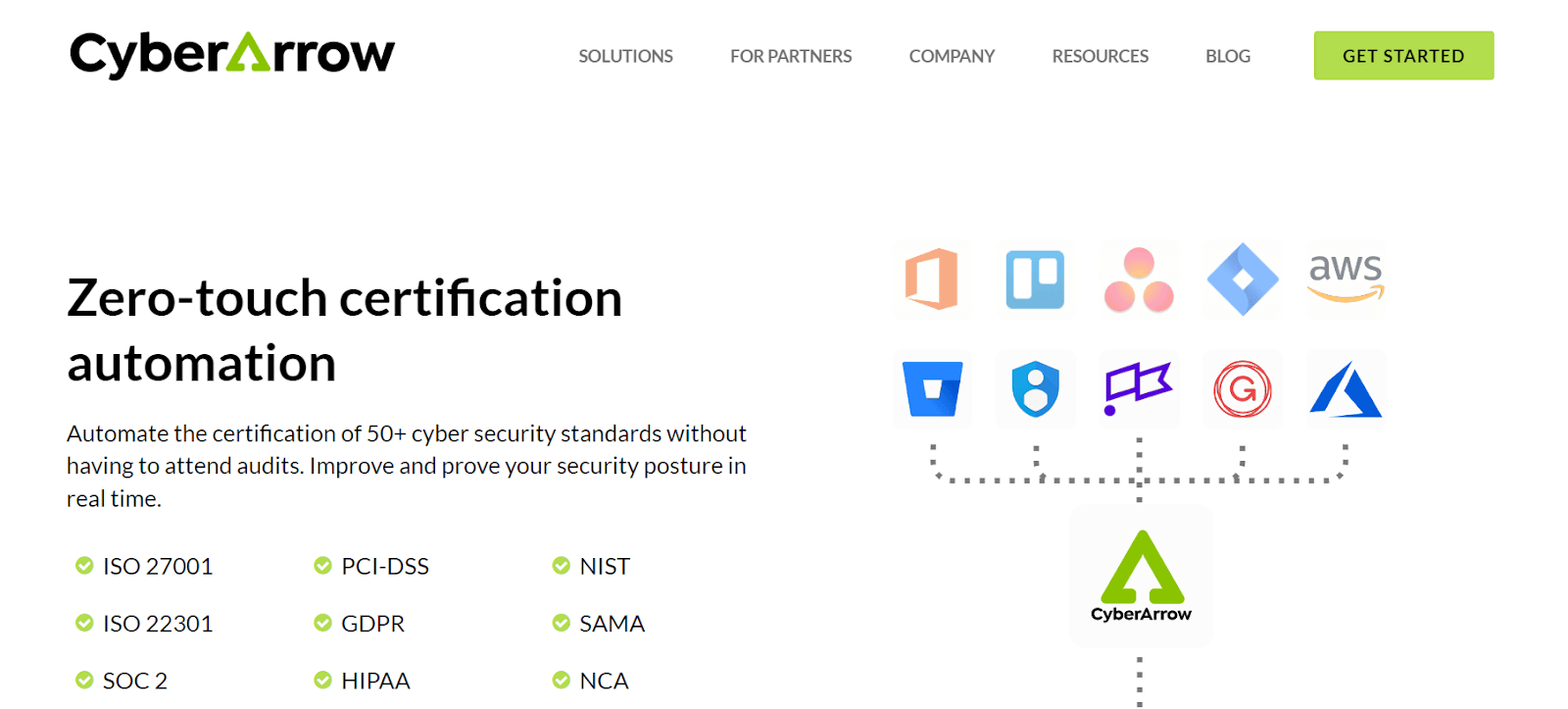
CyberArrow is one of the top GRC tools that revolutionize the implementation and certification of over 50 cyber security standards without the need for attending audits. With its user-friendly interface, CyberArrow integrates into existing workflows. It employs advanced algorithms for automating risk management which enables organizations to proactively address compliance risks. With its regularly updated regulatory intelligence database, CyberArrow ensures organizations are well informed about changes in compliance requirements.
Key Features
- Gathers evidence from 60+ integrations with pre-approved templates.
- Monitors 24/7 and triggers alerts for proactive risk management.
- Included 3000+ pre-mapped risks and mitigations across 50+ standards.
- Zero-touch audits for hands-off certification.
- Virtual CISO for expert advice.
Pros
- Fast onboarding and easy deployment of CyberArrow within 30 minutes
- Guarantees compliance in just three weeks
- Comprehensive compliance scans and reports
- 24/7 customer support
Cons
- Only available in 2 languages (English & Arabic)
2. Drata
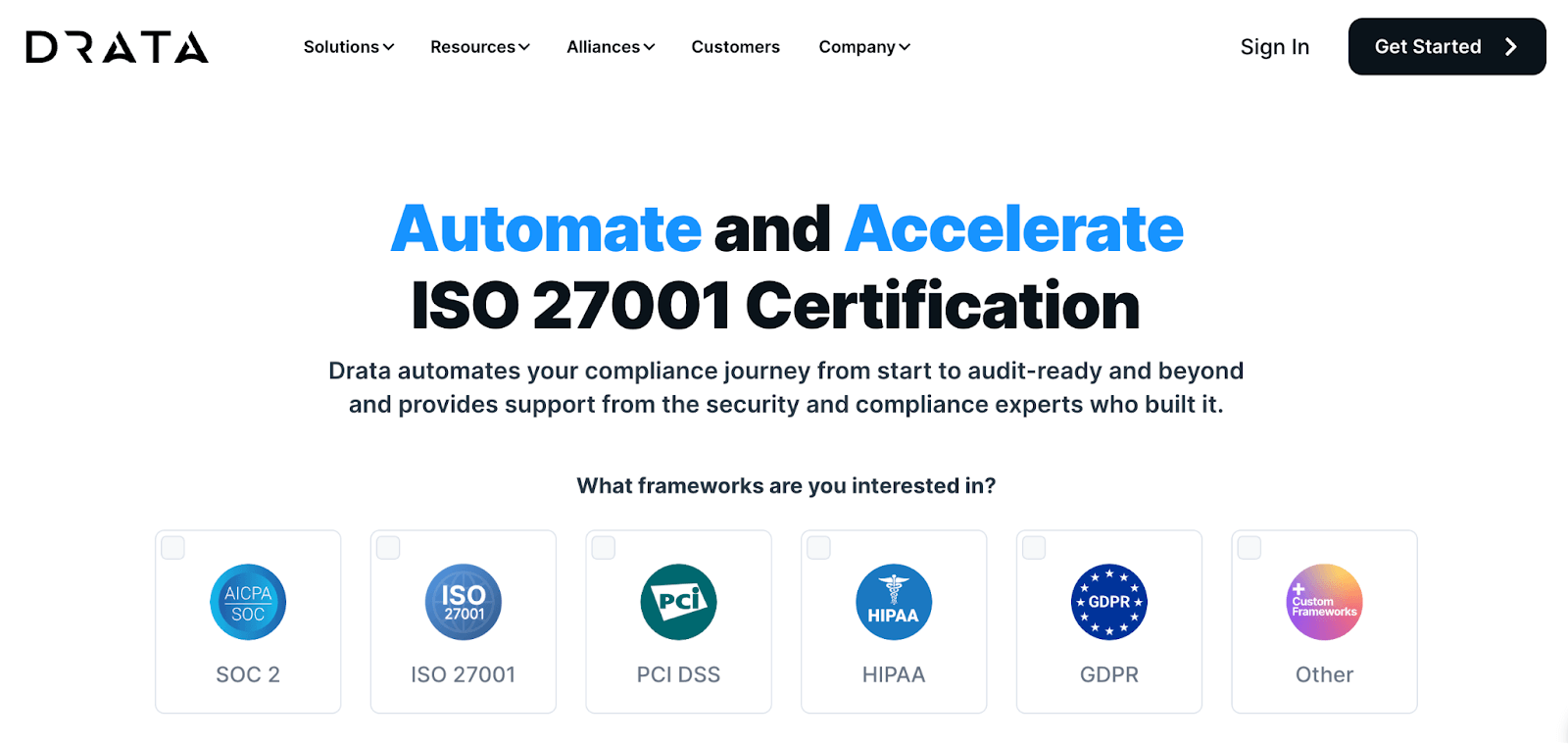
Drata is a compliance automation tool that offers adaptive automation for reconfigurability. It enables the creation of no-code tests with custom logic, streamlining control monitoring. Drata centralizes all evidence, controls, and documents, providing a unified platform for managing compliance processes. Continuous control monitoring offers full visibility into compliance status, empowering organizations to stay ahead of risks and action items.
Key Features
- Centralizes management of SOC 2 and diverse frameworks like ISO 27001, HIPAA, and GDPR.
- Gather evidence seamlessly through API integrations and custom tests.
- Role-based access and compliance for 20+ frameworks.
- Tailored compliance solutions to each company’s unique needs.
Pros
- Intuitive user interface.
- Accelerate audit readiness.
- Help from compliance expert assistance.
Cons
- High prices for basic business needs.
- Needs improved collaboration tools.
3. Sprinto
Sprinto is an integration-first, automation-enabled platform designed to simplify security compliance. With pre-approved, auditor-grade compliance programs launchable in just a few clicks, Sprinto alleviates the burden of navigating complex compliance requirements. Its low-touch approach utilizes adaptive automation to organize tasks, nudge progress, and capture evidence continuously in an audit-friendly manner. Sprinto also offers expert support, guiding organizations in implementing the right controls and practices from day one.
Key Features
- Seamlessly integrates with cloud setups to consolidate risk and map entity-level controls.
- Runs fully automated checks and prompts remediation.
- Facilitates effortless connection with accredited auditors.
- Organizes tasks tier-wise and nudges progress, minimizing manual intervention and maximizing efficiency.
Pros
- Quick and easy setup.
- Good support.
- Intuitive user interface.
Cons
- Sometimes, it lacks accurate checks.
- Occasional lag in syncing across devices.
4. Vanta
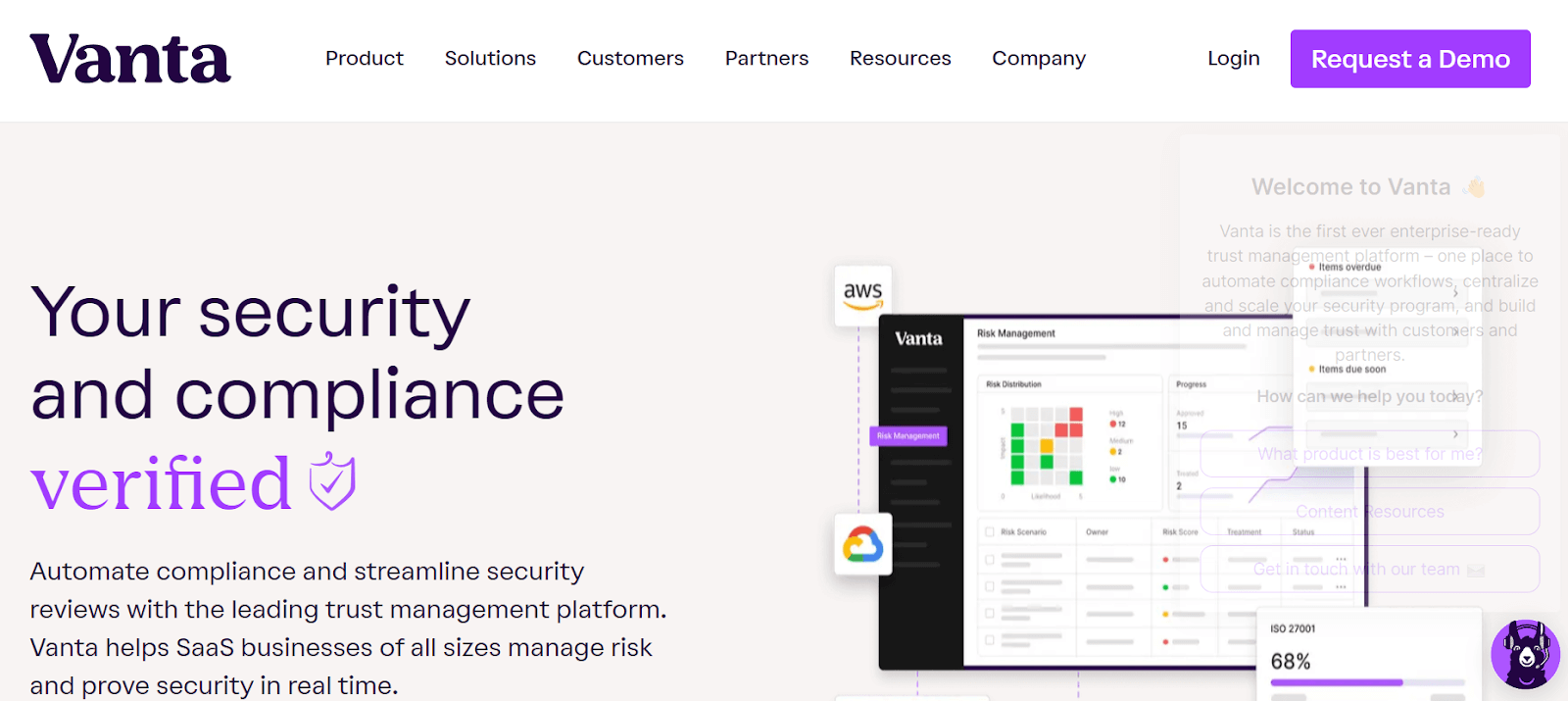
Vanda is among the top GRC tools that automate compliance and streamline security reviews, specifically tailored for SaaS businesses across all scales. Its robust capabilities empower organizations to manage risk and demonstrate security in real-time. It can handle up to 90% of the workload associated with adhering to security and privacy frameworks. The platform also issues alerts promptly whenever anomalies are detected, enabling proactive risk management and rapid response to potential threats.
Key Features
- Connect with over 300 pre-built system integrations to automate compliance.
- Easily scope out resources not relevant for compliance.
- Access to dozens of pre-built security policies or create custom ones.
- 20+ pre-built security and privacy frameworks.
Pros
- Speedy audit preparation and time to certification.
- Prompt customer support.
- Capabilities driven by API.
Cons
- Free trial not available.
- Learning curve.
5. Secureframe
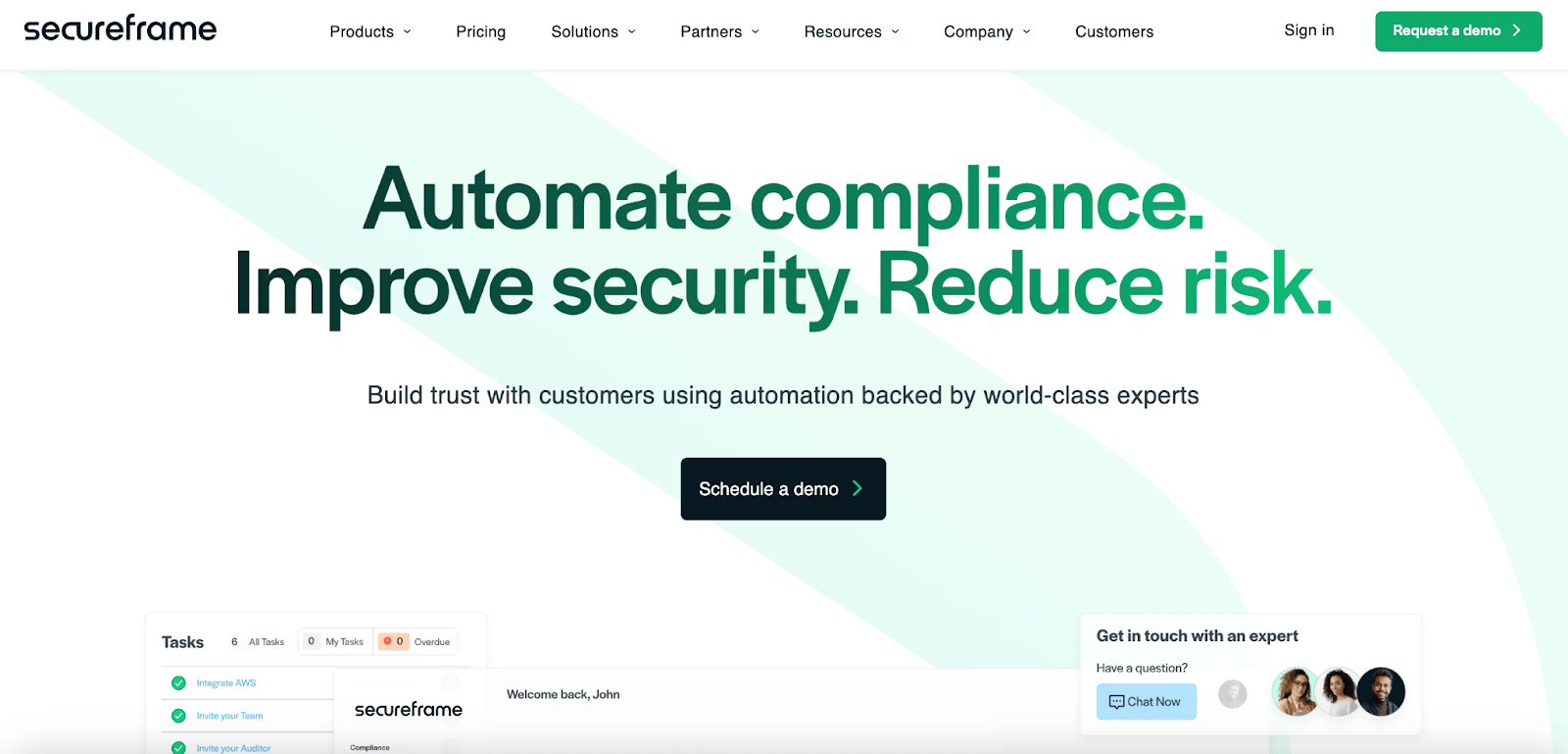
Secureframe revolutionizes compliance management by integrating AI to streamline tasks and automate manual processes effectively. This platform empowers organizations to efficiently handle security, risk, and compliance, saving valuable time and resources. One of Secureframe’s standout features is its Trust Center, which provides a comprehensive overview of the organization’s security posture. Through readiness reports, questionnaire automation, and other tools, organizations can easily showcase their commitment to security, accelerate sales cycles, and build trust with customers.
Key Features
- AI-powered capabilities to automate and streamline compliance processes.
- Integrate with various systems and tools through Secureframe’s integration library.
- Gain visibility into asset and employee access to sensitive data through continuous monitoring, personnel management, and vendor management features.
- Automated evidence collection.
Pros
- End-to-end compliance support.
- Continuous monitoring to enhance visibility.
- Centralized dashboard for real-time compliance status.
Cons
- Requires time to set up.
- Some manual intervention required for the configuration of compliance for complex systems.
Criteria for evaluating GRC tools
Selecting the right GRC tools is crucial for organizations aiming to navigate the complex landscape of regulatory requirements efficiently. To aid in this decision-making process, it’s essential to establish clear criteria for evaluating GRC tools.
- Compliance automation: Assess the extent to which the GRC tool automates compliance processes, such as policy enforcement, risk assessment, and audit preparation.
- Integration support: Evaluate the tool’s compatibility with existing systems and applications through integration capabilities, ensuring seamless data flow and communication.
- Expert support: Assess the availability of expert support from the GRC tool provider, including assistance with implementation, configuration, and ongoing usage.
- Customization: Consider the tool’s flexibility and customization options to tailor compliance processes and workflows according to specific organizational needs and requirements.
- Scalability: Consider the tool’s scalability to accommodate organizational growth and evolving compliance needs over time.
- Ease of use: Assess the tool’s user interface, usability, and user experience to ensure ease of adoption and efficient usage by stakeholders across the organization.
- Framework support: Determine the range and depth of compliance frameworks supported by the tool, including industry standards such as SOC 2, ISO 27001, HIPAA, PCI DSS, GDPR, NIST, and others.
Automate compliance with CyberArrow
Ready to streamline your compliance processes and enhance your security posture? Take the first step towards automated compliance and risk management by scheduling a free demo today. Discover how CyberArrow’s comprehensive features and intuitive interface can empower your organization to navigate regulatory requirements effortlessly.
Don’t let manual compliance tasks slow you down – adopt automation with CyberArrow and stay ahead of compliance challenges.
See what our clients have to say about CyberArrow GRC:

FAQs
What are GRC tools?
Governance, Risk, and Compliance (GRC) tools are software solutions designed to help organizations manage and mitigate risks, ensure compliance with regulations and internal policies, and optimize governance processes. These tools offer features such as risk assessment, policy management, audit management, compliance tracking, and reporting.
How do I choose the best GRC tool?
To choose the best GRC tool:
- Define your organization’s needs and goals.
- Evaluate features like risk assessment, compliance tracking, and reporting.
- Consider scalability, integration, usability, and support.
- Review vendor reputation and reliability.
How much do GRC tools cost?
GRC tool costs vary widely depending on factors such as features, scalability, deployment options (cloud-based or on-premises), and vendor pricing models (subscription-based or perpetual license). Generally, GRC tools can range from a few thousand dollars to hundreds of thousands of dollars annually, with additional costs for implementation, training, and support.
